Celanese
Santoprene® TPV 251-92W232
Santoprene TPV 251-92W232 is a hard, colorable, flame-retardant thermoplastic vulcanizate (TPV) in the thermoplastic elastomer (TPE) family. It offers good fluid resistance and contains non-ether brominated flame retardants while not containing metal deactivators. This grade delivers high tensile strength combined with excellent elongation and is ideal for applications requiring outstanding flex fatigue and ozone resistance. Santoprene TPV 251-92W232 is shear-dependent and can be processed on conventional thermoplastics equipment for injection molding, extrusion, blow molding, thermoforming or vacuum forming. It is polyolefin based and recyclable within the manufacturing stream.
Key Features:
- UL listed for plastics components and wire/cable materials (U.S. and Canada)
- UL 94 Vertical Flame rated (V-0 at 1.5 mm and 3 mm)
- Excellent flex fatigue resistance
- Excellent ozone resistance
- Good fluid resistance
- Recyclable within the manufacturing stream
Processing Form:
- Injection Molding
- Multi Injection Molding
- Extrusion
- Sheet Extrusion
- Blow Molding
- Injection Blow Molding
- Extrusion Blow Molding
- Coextrusion
- Thermoforming
Processing Notes:
Desiccant drying for 3 hours at 80°C (180°F) is recommended. Santoprene TPV has a wide temperature processing window from 175 to 230°C (350 to 450°F) and is incompatible with acetal and PVC.
Santoprene TPV has a relatively high melt viscosity at low shear rates. Viscosity decreases as the shear rate increases. Increasing temperature has little effect on TPV melt viscosity. Smaller gates and higher shear rates keep melt viscosity low and improve melt flow. Please also refer to the injection molding guide.
Purpose:
Flame Retardant
Applications:
Electrical
Hardness:
92A
Delivery Form:
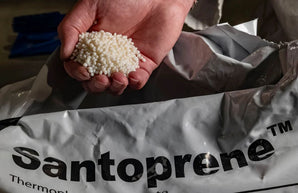
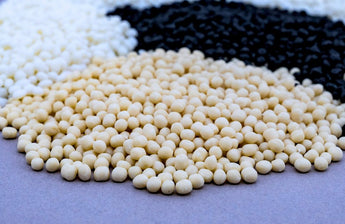
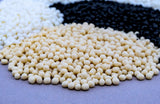
Pellets

Key Sustainability Features of Santoprene TPV
Recyclable
Unlike traditional rubber, Santoprene TPV can be reprocessed, reducing waste and improving manufacturing efficiency.
Lightweight
Reduces material usage and contributes to energy savings in transportation and logistics.
Eco-Friendly Production
Requires less energy during processing compared to traditional vulcanized rubbers.
Longevity
Durable products reduce replacement rates, minimizing overall resource consumption.
DOWNLOAD PRODUCT BROCHURE
Technical Data SheetSAMPLE FOR TESTING
Request Quote